Showing posts with label french. Show all posts

Wednesday, 8 June 2011

Madeleines

"He's a French bloke. Wakes up, in France. Has a biscuit. Thinks, 'what did I do yesterday?'... for 3,000 pages. It's brilliant, very French."
- Bernard Black talking about Proust in Black Books

I didn't tell you guys, I made another attempt at reading Proust this year! Well, I kind of had to; you don't really sign up for a module called The Painting as Phantom: Diderot to Proust without knowing you're gonna have to pick up even just a part of Temps Perdu.

The daunting task of reading this amazingly intense and looooong piece of literature was made less daunting by the excuse I created to make madeleines! I had treated myself to a madeleine pan earlier in the year in anticipation of this and I decided that if I made these delicious cakey-biscuity pieces of yumminess, the act of reading Proust would be transformed into a doddle of a task.
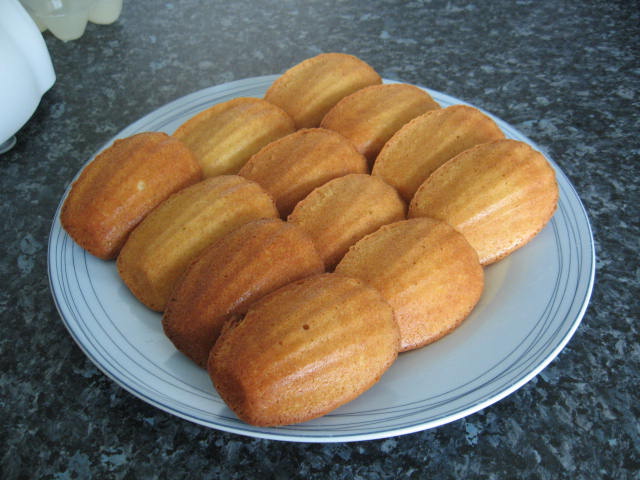


So I made them, and they were delicious. And then I read Proust. And that was... interesting. But the madeleines were good, and I guess that's what's important.

They were more than good, they had an entirely Proustian effect on me. For those of you who have read In Search of Lost Time (À la recherche du temps perdu if you're fancy), you'll know that early in the novel Proust's narrator eats a madeleine and is transported back to his childhood, when he used to have tea and madeleines with his grandmother. Every mouthful of madeleine I had took me back to the hotel where I worked in France back in 2009. Every morning, after getting up ridiculously early to ready and serve breakfast to the guests, I would have a madeleine, or two, with a chocolat. With every bite I could hear the whirring of the drinks machine, the unique ring of the reception telephone, and the ever so slightly shrill voice of my boss in the distance. It was a profoundly odd experience.

I think ol' Marcel may have been onto something.


Madeleines (adapted from Daniel Boilud's recipe, found here)

3/4 cup/3 oz/75 g plain flour
1 tsp baking powder
pinch of salt
3/4 cup+ 2 tbsp/3 oz/75 g granulated sugar
2 large eggs
1 tbsp honey
1 tbsp packed light brown sugar
zest of 1 lemon, finely grated
6 tbsp butter/3 oz/75 g, melted and kept warm

1. In a small bowl, sift together the flour, baking powder and salt. Set aside.

2. In a medium-sized bowl, mix the sugars, eggs, honey, and lemon zest using a whisk. Add the flour mixture and whisk until just combined. Add the butter, and stir until just incorporated. Cover the bowl with cling film and refrigerate for 1-1 1/2 hours.

3. Preheat the oven to 400ºF/200ºC. Liberally grease your madeleine pan. Place all the batter in a piping bag and pipe into each mold to about 2/3 full. If you don't have a piping bag, you can always use a ziploc/ sandwich bag and snip off one of the corners with a pair of scissors.

4. Bake for 5 minutes. Reduce the heat to 350ºF/180ºC and rotate the pan. Continue to bake about another 5 minutes, until the centres have risen and the edges are golden brown. Remove the pan from the oven, turn it upside down and tap it against the counter to release the madeleines. Serve warm.


Makes 1 dozen large-sized madeleines. See the link for how to make mini madeleines.

Wednesday, 20 October 2010

I'M BACK! and gratinée lyonnaise...

I know, I know. 'Where have I been?!' etc..  Well, I don't want to bore you with all the details, plus I'm back now, and am determined to remain as active as possible on here for as long as I can, so we can get back to the important stuff.

A couple bits I should mention first though:

1. I am in a new kitchen as of about a month ago. When I started this project I was in a tiny little kitchen in Southern Spain. Five months later I had packed up and moved back to my parent's house in Chicago, which is where those yummy looking scones were made. That was four months ago. Then, last month, I moved back to Canterbury to start my FINAL YEAR of uni (yikes) and have had to get used to a whole new kitchen, complete with hyperactive oven and brand spankin' new food processor.


2. I am a student again. This means that I am, once again, by definition, poor and lazy. You'll have to forgive me for the influence that these two attributes may have here.

3. Remember how I talked about making a red velvet armadillo cake for a friend's birthday, à la Steel Magnolias? Well, that's still happening, in fact her birthday's in about two weeks time. So watch this space.


Great. Now that all that nonsense is out of the way, we can focus on the cooking, yes?


It's hard to believe that this time a year ago I was in Lyon, France. Although I was working crazy hard as a hotel stagiaire, I had such an amazing time there and I miss it like whoa. Having been giving an insanely large amount of money by the Erasmus Programme (fools!) in the form of a grant, my friends and I spent a stupid amount of time bumming around some of the most fab restaurants in the city. One of my most favourite things to eat there, was gratinée Lyonnaise, or French onion soup. It was so delicious and so comforting, especially in the type of weather we're getting in Canterbury in the moment: cold and grungy.

I had been wanting to learn how to make this from scratch for a while now, especially since Autumn has well and truly set in. I finally managed to create it, based half on a recipe in Sophie Dahl's fab book, Miss Dahl's Voluptuous Delights, and half on the soups I tried when I was in France. This is the perfect soup for when you want to curl up under your duvet, watch some mind-rotting daytime TV, and forget about the world.


Gratinée Lyonnaise


2 medium onions
1 tbsp butter
Slug of extra virgin olive oil
1 litre beef stock
1 tbsp balsamic vinegar
salt and pepper (optional)
3/4 cup/3.5 oz/100g grated Gruyère cheese
1 thick slice baguette

1. Roughly chop the onions. In a large saucepan, melt the butter with the olive oil on a low heat. Once melted, move around the base of the pan to make sure it is all coated, then add the onions. Mix into the oil with a wooden spoon.

2. Allow the onions to sweat for approximately half an hour. Towards the end of the time, turn the heat up to medium, so that the onions brown around the edges.

3. Add the stock to the onions and turn the heat down to low again. Stir the mis and then add the balsamic vinegar. Allow to simmer for 15 minutes. While the soup is simmering, toast some french bread under the oven and cut into chunks. When the time is up on the soup, add salt and pepper to taste. Pour into bowls using a ladle.

4. Right before serving, add the cheese and bread.

Saturday, 8 May 2010

Fougasse aux olives

I've already talked before about my love of the french bread, fougasse, particularly when it's aux olives. I found about above my love for this particular bread when I first visited a Paul's patisserie during my stay in Lyon. There they do a tomato mozzarella sandwich on the olive fougasse which is to die for. For serious. I've tried once before to recreate said bread so as to have a proper tomate mozza at home (you can do it with regular bread but it's just not the same) and while the results have been edible, they've not been nearly close enough to Paul's version.

So, I set about recreating it, again. I figured I should use a different recipe, one that was more... authentic. I therefore decided that the best thing to do would be to find a French recipe, and translate. A daunting task for several reasons: 1) I have been in Spain for the past 3 months, had my mind focused on speaking Spanish, and have not spoken any French; 2) I hate written translations, I'm no good at them; and 3) I've never translated a recipe before, and the French are so particular about their cooking ways!

But I did it. And the results were again edible. Still not quite like Paul's but I'm getting a hell of a lot closer. And I had one great tomate mozza for my supper yesterday. Mmmmmm.


Fougasse aux olives (translated and adapted from this recipe from recette-dessert.com)

5 cups/17 oz/500g bread flour
1 tsp sugar
1 1/2 tsp dried yeast
1 1/2 tsp salt
1 1/4 cups/10 fl oz/300 ml mix of 1/2 water 1/2 milk
2 tbsp extra virgin olive oil
100 g of black olives, without stones, sliced
1 tbsp Provençal herbs
2 tbsp extra virgin olive oil

1. Sift all the dry ingredients (flour, sugar, yeast, salt) together into a large bowl. Make a well in the middle of the mix, then add the olive oil and the water/milk mix. Mix well until the mixture starts to form a ball. Draw into a ball with your hands (NOTE: If it is too dry to handle add the tiniest bit of water; if it is too sticky, add a tiny bit more flour).

2. Knead the dough on a lightly floured work surface for about 5 minutes. Lightly coat a bowl with olive oil. Place the dough in the bowl, cover with a damp tea towel and leave to sit for 1 hour, or until the dough has doubled in size.

3. Knead the air out of the dough, and then add the olives and herbs. Mix until well incorporated.

4. Roll out the dough on a floured work surface. Roll it into an oval shape and make scores in the dough with a pastry cutter or knife. Transfer the dough to a greased baking tray. Cover with a tea towel and leave to sit for 15 minutes. Preheat the oven to 475ºF/250ºC/Gas mark 9.

5. Brush the dough with the remaining 2 tbsp of extra virgin olive oil. Place in the oven for 10 minutes. When the 10 minutes is up, lower the temperature to 400ºF/200ºC/Gas mark 6 and cook for a further 20 minutes.

6. Leave to cool on a wire rack.

Saturday, 20 March 2010

Tarte au citron

I've written before about how much I love Spanish food, and all the amazing things that there are to eat here. Unfortunately, one area where– in my opinion– the Spanish are lacking is their puddings. Having lived in Lyon for five months, where puddings and pastries and chocolates and all those lovely little things are such an art and so great in number, I can't help but feel like there isn't much in España that competes.

A tower of macarons in Les Halles de Lyon. Delicious bastards.

I miss being 2 minutes away from a pâtisserie at any one time, and all treats that I could get so easily and so cheaply. And so do my flatmates, apparently; two of whom, like me, spent the first half of this school year in France. Lia had been asking me for a while if we can figure out how to do a tarte au citron, apparently her favourite confection (I'm much more of a tarte aux fraises gal m'self). I loved the idea of making this, but was... intimidated. The idea of making pastry frightens– or, I should say, frightened– me a little, mainly I think because with pastry there's so much that could go wrong. I thought (for a hot minute) about buying a ready-made pastry from the supermarket and using that, but if it was going to be worth doing, it was going to be done from scratch.

To get help conquering my fear I went to a site that I trust very much. I started reading David Lebovitz's blog when I was in Lyon, which seems a little odd seeing as I was without any means of cooking, but as it happens David Lebovitz is not only a great chef and food writer, but his 'American in Paris' perspective was so helpful when it came to just living in France, never mind eating there. And, he had some great tips on where to go and what to do in Lyon as well. So, I went started searching for pastry recipes, and sure enough I found one. One that made me totally more confident about the whole tart endeavour. It's a little... unconventional, but it works so well and the pastry comes out beautifully flaky, just as you'd find in a little French pâtisserie.

My very first ever pastry shell. Not half bad, I'd say.


Anyway, here is what we got, and while I'd say it was not perfect (I had to make do with what I had in my kitchen, no mesh strainer, no fluted tart pan) it was one heck of a good start. The curd that I made was also from David Lebovitz's site, but I modified it slightly to yield a bit more and to be a bit more lemon-y. I like it that way. And of course now that I'm not so afraid of the pastry, I'll make it prettier next time. Promise.


Tarte au citron


3/4 cup/ 190 ml lemon juice
grated zest of 2 lemons
3/4 cup/150 g/5 oz sugar
1/2 cup/125 g/4 oz butter
3 large eggs
3 large egg yolks
one prebaked tart shell (David recommends a 9-inch one, but I made a smaller one, for lack of pie tin. I would highly recommend using his recipe but if you have one that you prefer, go ahead and use that... or, if you're feeling lazy, just buy one from the shop)


1. Preheat the oven to 350º F/180º C/ Gas mark 4. In a medium-sized saucepan, heat the lemon juice, zest, sugar and butter together, waiting for the butter to melt. In a small bowl, beat together the eggs and egg yolks and set aside.

2. Once the butter has melted, whisk in roughly a third of the mixture to the eggs. Make sure to mix constantly: this will warm the eggs up a bit. Put the egg mixture back into the saucepan. Cook on a low heat, stirring the mixture until it thickens and there are bubbles starting to form around the edge of the saucepan.

3. Pour the curd mixture through a strainer onto the tart shell. Using the strainer is important: it gets rid of all the little lemon pips and thick nasty bits that may have made their way into your mix. If it needs help getting through the fine mesh, stir it with a spoon or spatula. Use a spatula to smooth over the top of the tart.

4. Put it in the oven for 5 minutes so that it has a chance to set. Remove from the oven. Leave to cool before slicing and eating.
Related Posts with Thumbnails