Showing posts with label spain. Show all posts

Thursday, 3 June 2010

"Ah, summer, what power you have to make us suffer and like it."- Russell Baker

*Gasps for air*

It's so damn hot!!

Seriously, it's boiling over by 'yer. We're on our fifth day of 35ºC + weather (that's 95ºF + for all you fahrenheiters), and while you might be thinking: "I don't know what you're moaning about! That sounds swell!" consider that there is no beach, a VERY strong sun, very little wind, and that we try not to turn on our air conditioning for fear of the astronomic electricity bill.

In all this heat, there's very little one feels like doing. The heat coming from the computer adds to the discomfort, it's too hot to shop, it's too hot to eat, and it's certainly too hot to do any work for uni! ;) In all this heat, all I want to do is take a siesta, listen to a ridiculously assembled summer playlist and drink gazpacho.


Gazpacho (recipe to follow).


Hope that wherever you are, you're keeping cool.

Thursday, 27 May 2010

Dorada a la sal

In my house in Chicago there are two framed watercolours hanging on our sitting room wall. One is of the house that my family stays in near a tiny fishing village in Almería– incidentally one of my most favourite places in the world– and the other is of a Dorada skeleton. This is something my dad painted on Christmas Day, 1999. We had decided to ring in the new millennium in Spain, and so spent Christmas there as well. Deciding to go the more untraditional route with regards to Christmas lunch, we had dorada, baked in salt.

Dorada. image from M Stevens and Son


Dorada literally translated into English (according to wordreference.com) is Gilt-head Bream. Sound familiar? I reckon even as a native Engish speaker you'd have to know a whole lot about fish to be able to identify one just from that title. Actually, dorada is very common in Spain, and in Portugal. It's a fresh-tasting, white fish similar to cod. Baking it in salt is probably one of the best ways to cook it (and I say baking it, you don't eat the salt with the fish, it all gets removed before serving). It creates a sort of kiln that allows it to be cooked almost perfectly. It also looks rather fancy so if making it for a dinner party or what have you you can make a show of removing the salt before you eat it.

The dorada in its salt shell


Dorada a la sal

2 Dorada, gutted, scales on, gills out
4 cups/2 lbs/1 kg rock salt
2 eggs
2 tbsp cold water
1 lemon

1. Preheat the oven to full heat. In a large bowl, mix together the salt, eggs, water, and grated lemon rind into a thick mixture. Place about a half of this mixture onto a baking tray and form a bed for your fish.

2. Place the fish on your salt bed, then cover with the remaining salt mixture. This should create a nice shell all around the dorada, about 1-2 cm thick. Make sure that the fish is completely covered by the salt. Place in the oven for 15 minutes.

3. To check whether or not the fish is cooked, stick a knife into the fish and then gently press it against your lips. If the knife is hot, then the fish is cooked. Do not take off the salt until the fish is cooked. Leave to sit for 10-15 minutes.

4. Get ready– this is the fun part! With the back of a spoon, firmly tap the salt casing of the fish. If you do it right, the hardened salt casing should crack nicely and all the pieces will begin to fall off the fish. If not, gently remove them with the teaspoon, making sure not to let any salt touch the flesh of the fish. With a sharp knife, cut along the spine of the dorada, then remove off the head. The dorada should open up nicely, and you'll be able to remove all of the bones pretty easily. Serve with a big wedge of lemon.

serves 2-3.

Tuesday, 25 May 2010

Chorizo al vino

Sorry for my absence folks. Been a busy gal. But I'm back, with some good stuff.

Another 'I will learn to cook this in Spain' dish out of the way. Chorizo al vino is one of the easiest things in the world to prepare, it just takes time. And, because it lasts for quite a while, it's totally worth making a lot at a time, using one or two chorizos in each batch. Perrrfect for tapas.


Chorizo al vino


2 chorizos, as picante as you want them
1 bottle bog standard red wine (the wine's going to be bubbling away for ages, there's not much point splashing out on a nice one)

1. Using a fork, prick holes all over the two chorizos. This will allow them to absorb the wine more easily. Place them in a saucepan that has just enough room for both of them. Pour the entire bottle of wine over the chorizos. The wine should just cover both of them. Bring to a boil and let simmer gently for 20 minutes.

2. Remove the pan from the heat. Place a lid on the saucepan and set it aside overnight to allow the flavours to really blend together.

3. When you're ready to eat your chorizo, remove them from the pan, being sure to conserve the wine. Cut the chorizo into thick slices. Place into a pan with half of the wine mix that you marinated the chorizo in. Fry, turning frequently, until the slices are nice and crispy and the wine, mixed with the juices from the chorizo, have reduced to 2-3 tbsp. Serve immediately.


Monday, 3 May 2010

Iced Tea Pops

It has been hot here lately. Hot hot hot. Even though it is only April and what Córdoba's residents insist is 'Spring', temperatures have reached the mid 30s (that's about 90-95ºF for all you fahrenheiters) and I have melted a few times. We're resorting to all measures to keep cool, without turning on the air conditioning that is.

It is this obscenely hot weather that has made me oh so thankful for my new favourite purchase. While perusing one of our local markets I managed to find ice lolly moulds... in the shape of umbrellas! OH how cute! And for €2 no less! These are something you could fill with juice or a soft drink, but I personally prefer to fill them with tea. So far only herbal tea– more specifically a great strawberry-kiwi-hibiscus blend that my wonderful pal Kate got me for my birthday– but I'm experimenting with more interesting things. What's great about this is you can monitor how sweet or how strong you make it, depending on your taste. I seriously recommend trying it.

I appreciate that I am an ENGLISH person using UMBRELLA ice lolly moulds and filling them with TEA. I'm experimenting with Earl Grey and milk ones. I'll keep you posted.

Saturday, 20 March 2010

Tarte au citron

I've written before about how much I love Spanish food, and all the amazing things that there are to eat here. Unfortunately, one area where– in my opinion– the Spanish are lacking is their puddings. Having lived in Lyon for five months, where puddings and pastries and chocolates and all those lovely little things are such an art and so great in number, I can't help but feel like there isn't much in España that competes.

A tower of macarons in Les Halles de Lyon. Delicious bastards.

I miss being 2 minutes away from a pâtisserie at any one time, and all treats that I could get so easily and so cheaply. And so do my flatmates, apparently; two of whom, like me, spent the first half of this school year in France. Lia had been asking me for a while if we can figure out how to do a tarte au citron, apparently her favourite confection (I'm much more of a tarte aux fraises gal m'self). I loved the idea of making this, but was... intimidated. The idea of making pastry frightens– or, I should say, frightened– me a little, mainly I think because with pastry there's so much that could go wrong. I thought (for a hot minute) about buying a ready-made pastry from the supermarket and using that, but if it was going to be worth doing, it was going to be done from scratch.

To get help conquering my fear I went to a site that I trust very much. I started reading David Lebovitz's blog when I was in Lyon, which seems a little odd seeing as I was without any means of cooking, but as it happens David Lebovitz is not only a great chef and food writer, but his 'American in Paris' perspective was so helpful when it came to just living in France, never mind eating there. And, he had some great tips on where to go and what to do in Lyon as well. So, I went started searching for pastry recipes, and sure enough I found one. One that made me totally more confident about the whole tart endeavour. It's a little... unconventional, but it works so well and the pastry comes out beautifully flaky, just as you'd find in a little French pâtisserie.

My very first ever pastry shell. Not half bad, I'd say.


Anyway, here is what we got, and while I'd say it was not perfect (I had to make do with what I had in my kitchen, no mesh strainer, no fluted tart pan) it was one heck of a good start. The curd that I made was also from David Lebovitz's site, but I modified it slightly to yield a bit more and to be a bit more lemon-y. I like it that way. And of course now that I'm not so afraid of the pastry, I'll make it prettier next time. Promise.


Tarte au citron


3/4 cup/ 190 ml lemon juice
grated zest of 2 lemons
3/4 cup/150 g/5 oz sugar
1/2 cup/125 g/4 oz butter
3 large eggs
3 large egg yolks
one prebaked tart shell (David recommends a 9-inch one, but I made a smaller one, for lack of pie tin. I would highly recommend using his recipe but if you have one that you prefer, go ahead and use that... or, if you're feeling lazy, just buy one from the shop)


1. Preheat the oven to 350º F/180º C/ Gas mark 4. In a medium-sized saucepan, heat the lemon juice, zest, sugar and butter together, waiting for the butter to melt. In a small bowl, beat together the eggs and egg yolks and set aside.

2. Once the butter has melted, whisk in roughly a third of the mixture to the eggs. Make sure to mix constantly: this will warm the eggs up a bit. Put the egg mixture back into the saucepan. Cook on a low heat, stirring the mixture until it thickens and there are bubbles starting to form around the edge of the saucepan.

3. Pour the curd mixture through a strainer onto the tart shell. Using the strainer is important: it gets rid of all the little lemon pips and thick nasty bits that may have made their way into your mix. If it needs help getting through the fine mesh, stir it with a spoon or spatula. Use a spatula to smooth over the top of the tart.

4. Put it in the oven for 5 minutes so that it has a chance to set. Remove from the oven. Leave to cool before slicing and eating.
Sunday, 14 March 2010

¿Como se dice paprika en español?

A couple of weeks ago I was strolling along at way too leisurely a pace to campus from Plaza de las Tendillas, when my friends and I all stopped dead in our tracks. We were distracted by a shop window that we had ignored so many times before; it had been boarded up with brown paper for some time, but now the paper was down and there was a sign in the window. From the glass shop-front that gave a view of the entire store you could see chocolates, spices, teas, and all sorts of fun kitchen accessories that I generally spend far to much money on. The shop was closed at that point, it was mediodía and true to form all the Spanish shops were shut (save for all the tourist traps). But we made a decision that we would have to go back to this shop, rather sweetly named SpicyChoc, and try desperately not to spend the small amount of money we all had.


photo courtesy of pekoe.es

We finally managed to go to the shop when it was open a few days ago. I walked in and instantly felt I could spend all day in there. Not only do they have the biggest collection of loose-leaf teas I've seen in a long while, orangettes (orange pieces dipped in dark chocolate, a speciality in Lyon),  and lots of kitchen gadgets, but they also sell paprika. In a test tube.


I had been looking for paprika for a long while in Spain and was– up until my jaunt to SpicyChoc– unable to find it. I had just taken for granted that the word paprika in Spanish would be, well, paprika. Not so. You see, Spanish paprika is known as pimentón, and is quite different from paprika around the rest of the world. It has a smoked flavour, one that you might find when it's used in chorizo or sobrasada. It's a lovely spice, but I want paprika, dammit! I use it so frequently in day-to-day cooking that making lunch/dinner without it has been quite a challenge. So I was so happy when I saw this little test tube for 0,80€. Undoubtedly I will go through it in about three weeks, but that just means another excuse to go back to SpicyChoc.


Friday, 12 March 2010

The first boquerones adventure

If you look back a couple of posts, one of the things I decided that I must learn to cook in Spain was boquerones, a small whitebait/anchovy sort of fish that are normally served fried with lemon juice as a typical tapas dish. Well, a last minute decision on a calm weekday evening allowed me to realise this goal.

boquerones
There they are, accompanied by one of my typical 'kitchen sink salads'. Yummm.

Not bad for a first effort, I'd say. Up until this point, I had never used a deep fryer before in my life, and the idea of it was a little more than intimidating. I had no idea just how much oil would be required, even just to fry the bare minimum– this is not a dish you'll want to be eating everyday! But I wouldn't say that they turned out as well as they possibly could. Next time, an absolute must would be to buy them fresh from the fishmongers. I used a frozen bag this time (I know, naughty naughty) that I got from the local supermarket for a 1,80€; I'm my father's daughter, I can't resist a bargain. Another thing that I shall have to keep in mind is how quickly these little fishies go from not-quite-cooked to very-very-cooked. You want the fish to be crispy on the outside, but still soft and moist on the inside, you definitely don't want them to crisp up and dry out!!

I shall keep you updated on my efforts.

Wednesday, 24 February 2010

Things I will learn to cook in España

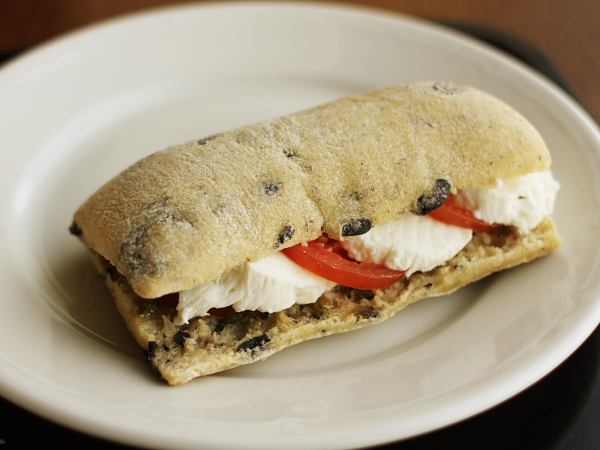
One of the greatest benefits about spending the year abroad is the food. Don't get me wrong, I love a good slice of Chicago deep dish pizza, and I am a firm believer in the revival of British cuisine, but being in both France and Spain over the past 7 months has given me the opportunity to taste so much good food. In France it was foie gras, steak frites, gratinée lyonnaise, my favourite ever cheese saint-marcellin and the slightly unique Lyon delicacies of quenelles and andouillette. I collected many recipes during my time there of typical 'French' foods that I planned (and still do plan) to master and use to dazzle friends and family with. I've only tried one of these recipes so far, the fougasse aux olives, a delicious olive bread that I first discovered at Paul's patisserie as a part of their tomate mozzarelle sandwich (by the way, pair that with a bottle of orangina and you've got yourself the best hangover cure ever).

the world's greatest sandwich


Now that I have a kitchen at my disposal, I plan to learn how to cook authentic Spanish food while I'm actually in Spain. Most of the things I feel are relatively simple and I could figure out the recipe without much help. There are of course, a few foods that have me completely stumped and I shall have to consult some experts on how to make those particular yummy things. Anyway, so far I've come up with this list; any suggestions on what to add however would be most welcome!


1. boquerones fritos- I've been in love with these tapas dish ever since I was little. My family used to holiday in the same tiny fishing village in the south east of Spain every summer, and being a picky little eater, these were one of the few things I would eat. Translated as anchovies or whitebait, these fish also come served in vinegar but they're nothing compared to the deep fried version.


2. paella- probably the most iconic Spanish dish out there, and definitely the most known outside of Spain. Although originally a Valencian dish, there are three main varieties of paella: Valencian, seafood, and mixed. This rice dish traditionally contains meat (chorizo), seafood, vegetables and beans, although I've seen so many "everything but the kitchen sink" versions of these I'm pretty sure that anything goes.


3. chorizo al vino- chorizo in wine– sounds simple, right? Not so. The chorizo, once cooked, has to marinate in the wine for a minimum of 8 hours. And once you taste it you can see why. The wine complements the chorizo's smokey flavour oh so well. You'll never want to eat anything else.


4. calamares- another very well-known recipe, another tapas staple. This deep-fried squid is perfect with just a wedge of lemon, and nothing else. Perfect simplicity.


5. salmorejo cordobés- slightly similar to gazpacho, salmorejo actually originated in Córdoba. Made with tomatoes, bread, olive oil, garlic, and vinegar, this thick soup is served cold with diced jamón serrano and hard-boiled egg should you choose (I, personally, will be avoiding the egg). This sounds just perfect for when the renowned Andalucían summer sets in.


6. churros- in this town if you want to enjoy churros outside of your own home, you gotta do it before midday. This is where our flatmates and I are tripping up. Finding it hard to adjust to the Spanish bedtime (either going to bed way too early or way too late) we are only ever up and out of the house before midday if we have a class to go to. This is why I'm determined to master the art of churros con chocolate– something which I'm sure could do a world of good for the soul after a tough class or a night out.


I shall keep you all updated with my progress!

Saturday, 20 February 2010

My New Kitchen, My New Blog, My New City

I arrived in Córdoba just over a week ago. As a student of French and Spanish, it is an 'integral part of my degree' (or so says my university) to spend this, my third year as a university student in both a French and Spanish-speaking country. The last five months of my life were spent in a hotel in Lyon, France, working as a receptionist. I lived in the hotel, to save time and money finding a flat, and was therefore left WITHOUT a kitchen for those entire five months. As a person who loves to cook this was a stressful situation, but I had friends with kitchens who were all too happy to let me feed them. And, being left without a means to make myself food, I was often left with no choice but to let others make it for me, which in one of the culinary capitals of France was no bad thing.

I am now in Spain with my own brand spankin' new kitchen and three perpetually hungry flatmates who were overjoyed when they heard about my cooking habits. While not necessarily the biggest kitchen in the world, it has all the things that I could need (for the moment) and so I'm hoping cooking in it will be a breeze. My only concern is that everything is new and white; I'm not the tidiest person at the best of times and don't even get me started on how I'm like when I'm cooking– fingers crossed I can keep this place relatively clean for the 5 months that I'll be using it!

My kitchen. Note the dirty mugs in the sink and the empty cava bottles!


Related Posts with Thumbnails